The Simple Truth About Creative Growth
Most advice about creativity sounds inspiring. “Follow your inspiration.” “Wait for the muse.” “Be spontaneous.”
Here’s what actually works: you do the thing again. And again. And again.
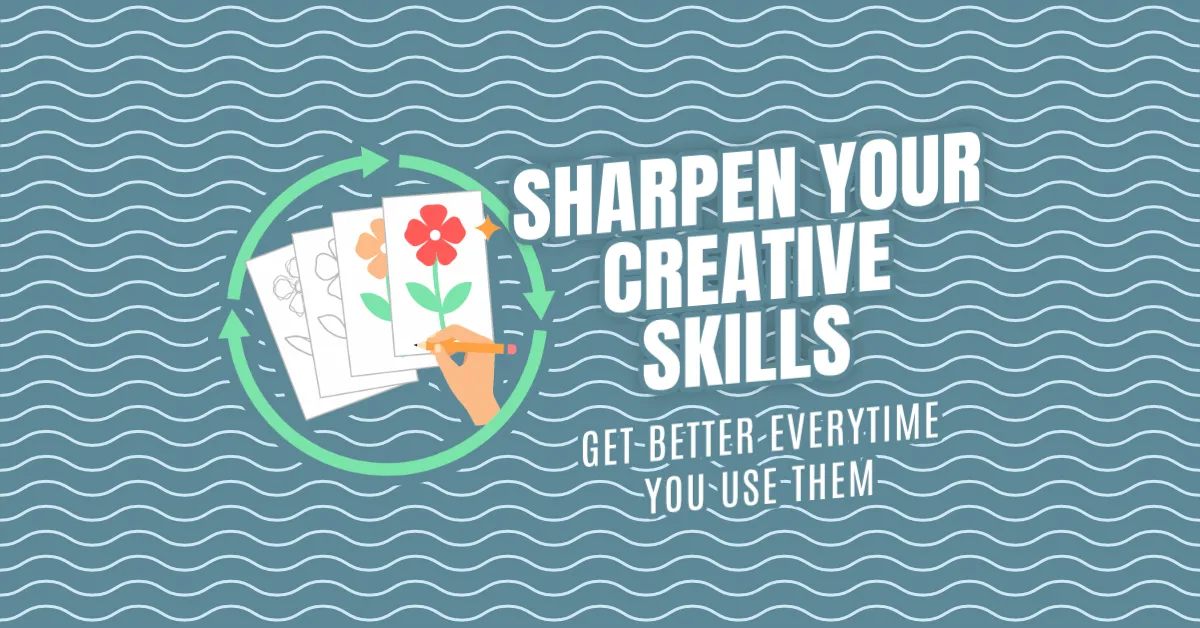
Not because you’re disciplined or motivated. Because repetition builds systems. The first time you try a creative process — whether it’s sketching thumbnails, writing headlines, mixing colors, or framing shots — it’s slow. You’re making decisions at every step. By the tenth time, those decisions become automatic. You’ve built a system. Systems are what let you work fast without thinking.
Why Repetition Feels Boring (And Why That’s the Point)
Let’s be honest: doing the same thing over and over gets dull. Your brain craves novelty. That’s not a flaw — it’s how you’re wired.
The problem isn’t repetition. The problem is how we frame it.
We treat repetition as a grind. A test of willpower. Something you “push through.” That’s why people quit. They’re fighting their own biology.
Instead, structure repetition as cycles. Do the work. Step away. Come back. No rigid schedules. No streak counters that make you feel guilty for missing a day. Your rhythm. Your rules.
I know a ceramicist who throws the same bowl form every Monday morning. Not because she has to. Because she noticed that after a weekend away, her hands remember the motion faster than her mind does. The break is part of the practice.
Micro Learning: Small Reps, Big Gains
You don’t need hour-long sessions. Five minutes of focused repetition beats an hour of scattered effort.
Micro learning works because it fits in the cracks of your day. Three thumbnail sketches while coffee brews. One color mixing exercise before bed. Two headline variations during lunch.
The key: each rep is intentional. You’re not mindlessly repeating. You’re noticing what changed. What felt smoother. What still feels clunky. That awareness compounds.
A designer I know practices one keyboard shortcut every morning. Just one. Two weeks later, her workflow is noticeably faster. Not because she memorized a list — because she built the muscle memory one tiny rep at a time.
Your Creative System, Your Rules
There’s no universal “correct” way to structure creative repetition. Some people thrive on daily practice. Others need weekly deep dives. Some track progress meticulously. Others go by feel.
What matters is that you have a structure — even a loose one — and that you return to it.
Start here:
- Pick one creative skill you want to speed up
- Define the smallest useful unit of practice (one sketch, one paragraph, one chord progression)
- Do it. Step away. Notice what’s different next time.
- Adjust the frequency until it feels sustainable, not aspirational
The system serves you. Not the other way around.
When It Stops Feeling Like Work
Here’s the part nobody tells you: eventually, the repetition becomes the creative act.
The pianist doesn’t practice scales to “get them over with.” The scales are where the music lives. The repetition reveals nuance you’d miss if you only played the piece.
Your creative system becomes a place you return to not because you have to, but because it’s where you think most clearly. Where decisions happen faster. Where the work feels like play again.
That’s the goal. Not mastery for its own sake. A system that gets out of your way so you can make the things you actually care about.
What’s one creative skill you’ve noticed getting faster with repetition? I’d love to hear what worked for you in the comments.